
 Mamun_Sheikh/Shutterstock
It is incredible how many myths surround the Android smartphone ecosystem today. Some of these misconceptions were born of early comparisons to Apple when these Android devices were making their mark in the late 2000s. In 2008, the HTC Dream was the first direct competitor to Apple. When that phone came out, the design was quirky, and no one really had a complete grasp of what an Android ecosystem would have to offer. There were going to be bugs, security problems, and many similar painful lessons to learn. Apple experienced similar growing pains when the first iPhone launched, such as the lack of an App Store and the inability to use 3G networking.
However, the constant comparison between these two smartphone ecosystems for years has given rise to numerous notions that are no longer true — largely because smartphone companies have evolved significantly. That said, there are still plenty of myths about Android phones making the rounds, along with a few new ones, like how sideloading is handled, the update policy, and more. Let’s debunk a few of these myths and paint a clearer picture of where Android phones stand today.
Android phones are not secure
 Primakov/Shutterstock
You might have heard that Android phones are virus-ridden machines and that they have inferior security to iPhones. While that might have been true in the early days of Android, it certainly isn’t true anymore. One reason for this misconception is that Android offers more flexibility than Apple. That’s because sideloading was part of Android’s culture, while Apple only allowed it a few years ago to comply with Europe’s Digital Markets Act in specific regions. But despite Apple’s rollback, sideloading still has heavy restrictions. One of the cited reasons Apple doesn’t allow sideloading is user safety. Sideloading means apps are acquired outside the official app store and aren’t properly vetted, which could lead users to download malware.
While sideloading on Android can introduce a point of vulnerability, it’s not as bad as you think. Firstly, it’s a choice, and no one has to do it to gain the full Android experience. You can just download apps officially and safely using the Google Play Store. It offers many third-party apps that are properly vetted — there are over 2 million apps available — making it very difficult for malware to sneak past. Moreover, security on Android is also multi-layered, meaning there are app-level and system-level protections that ensure that if one layer is breached, the other can defend against the threat. Ironically, the open-source nature of Android also makes it easier to identify where vulnerabilities may lie and the best ways to patch them, as anyone can review the code. Hence, saying Android phones are less secure is simply not true.
Android phone cameras are not good
 tinhkhuong/Shutterstock
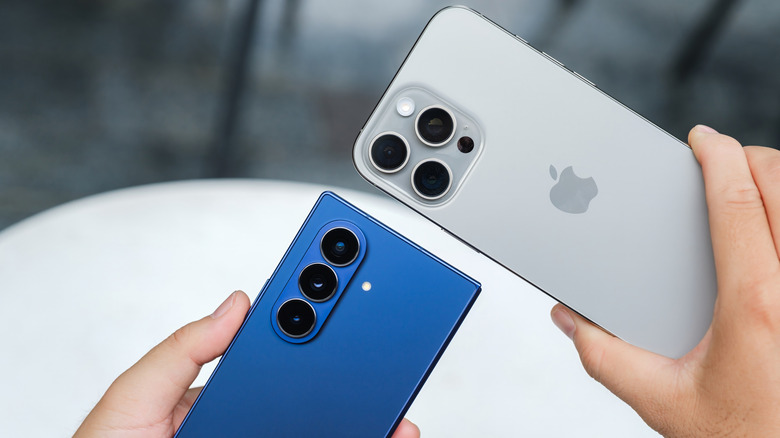
It’s a tough place to be in when Android’s smartphone ecosystem is as diverse as it is. You can essentially buy a phone from Vivo, OnePlus, Google, Nothing, Samsung, Motorola, and more. But all these phones have differentiating specs, including the cameras, along with varying budget constraints depending on the brand or lineup. Basically, no two Android phones are created equal, which makes it confusing when you’re evaluating phones based on their cameras.
Even Pixel and Samsung phones have come a long way with their smartphone cameras. For one, the zoom capabilities have improved. That means you should get sharper images with a Samsung flagship’s telephoto lens – responsible for capturing details without losing quality at higher magnification. Image processing on Android has gotten miles better thanks to AI, too, further closing the gap by taking better images with the same hardware, which you can see in Pixel phones. Though iPhones should still win out in smartphone camera consistency, calling an Android that’s similarly priced to an iPhone too far behind or not proficient in terms of camera performance is hyperbole.
Google is turning Android into a walled garden
 ZikG/Shutterstock
Android phones have always been more open compared to their Apple competitors, mainly because of the architecture, being a lot more customizable than the former. But it’s not necessarily as open as it once was, relative to what it was a few years ago, due to changing policies. Though some of those concerns are not unfounded, since at the very least, Google has taken a fenced-off ecosystem approach: tightening restrictions, but not necessarily closing them off completely.
For example, sideloading has been slowly changing on Android. Google originally announced it would impose heavy restrictions on sideloading, but later backed off in favor of a more reasonable approach. Instead of eliminating sideloading, as users had been worried about, Google opted for transparency, or at least a valuable warning: essentially, adding a verification process for app developers who distribute apps outside the Play Store. As a secondary precaution, the company employed another strategy called the “advanced flow,” which involves triggering a developer-mode setting and waiting for a one-time 24-hour period to bypass extra protections that block sideloading. Then, once the period is up, you can only remove the protections completely by verifying your identity, through something like biometrics. While this new system brings friction to the practice, it doesn’t try to block it off completely.
Android phones are always cheap
 Elvard project/Shutterstock
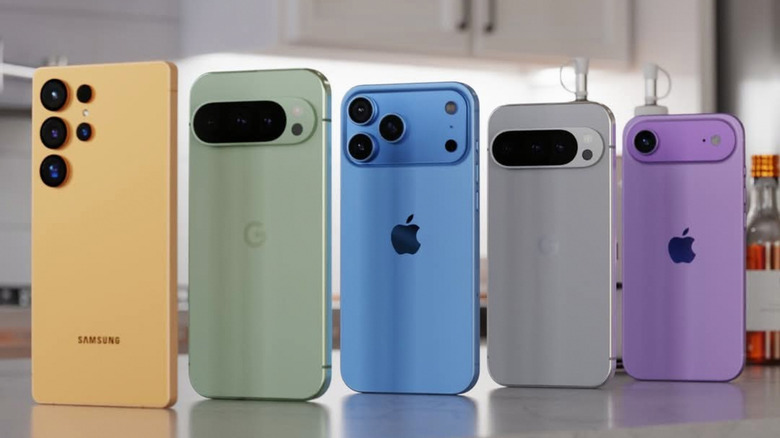
Classifying Android can get a little confusing. That’s because there are plenty of lower-tier and premium budget phone options, alongside some really expensive flagships. For example, the cheapest new iPhone you can secure in 2026 is actually the iPhone 17e. This is considered the budget option in Apple’s lineup, but it still costs around $600. While that isn’t an outrageous price, you can still pay less than that for really low-end phones from Samsung and Nothing. The Samsung Galaxy A17 5G is actually less than $200, but the iPhone 17e blows it out of the water – thanks to its cameras and chipset. So it’s an unfair comparison, just like judging that every Android phone is cheap and can’t compare to the premium-ness of Apple based on price alone.
If you look at some of the top Android manufacturers like Google, Samsung, OnePlus, and Motorola, you can find flagships that go neck and neck with Apple’s smartphone prices. Even Motorola, known for being an affordable, budget-friendly brand, has a $800 phone in the Moto Razr Ultra (2025). Paying $2,000 for an iPhone 17 Pro Max (2TB) isn’t completely ridiculous when the Samsung Galaxy Z Fold 7 is priced similarly. In fact, the Samsung Trifold is even more costly than the Pro Max.
Android’s update policies are not as good as Apple’s
 wisely/Shutterstock
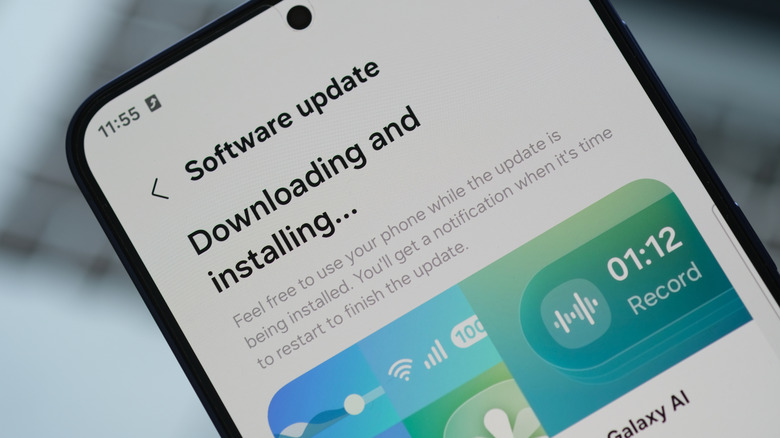
Again, since Android is much more diverse than Apple, software policies will vary by manufacturer. For example, Samsung and Google have adopted a more generous update policy compared to Motorola and OnePlus. Samsung and Google will provide seven years of OS and security updates for their flagship lineup. OnePlus promises four years of Android updates, but only six years of security patches. However, there might be some delays or discrepancies with when these updates arrive in the U.S., as people have complained that the rollout can be slow.
Motorola, which has been infamous for its abysmal policy of offering only two or three years of software upgrades, has recently pushed for seven years for its new premium launch, the Motorola Signature (not available in the U.S.). Apple, on the other hand, has always been consistent. Before, the company never set a specific release or end-of-life schedule, but it’s been pretty good about keeping its devices supported for a while. But now, Apple has responded to recent UK regulations in 2024 to give a definitive answer: the company plans to offer at least five years of software updates starting with the iPhone 15. While that’s fairly decent compared to what other smartphone manufacturers have offered before, it still doesn’t necessarily match the 7-year promise provided by Google and Samsung.