
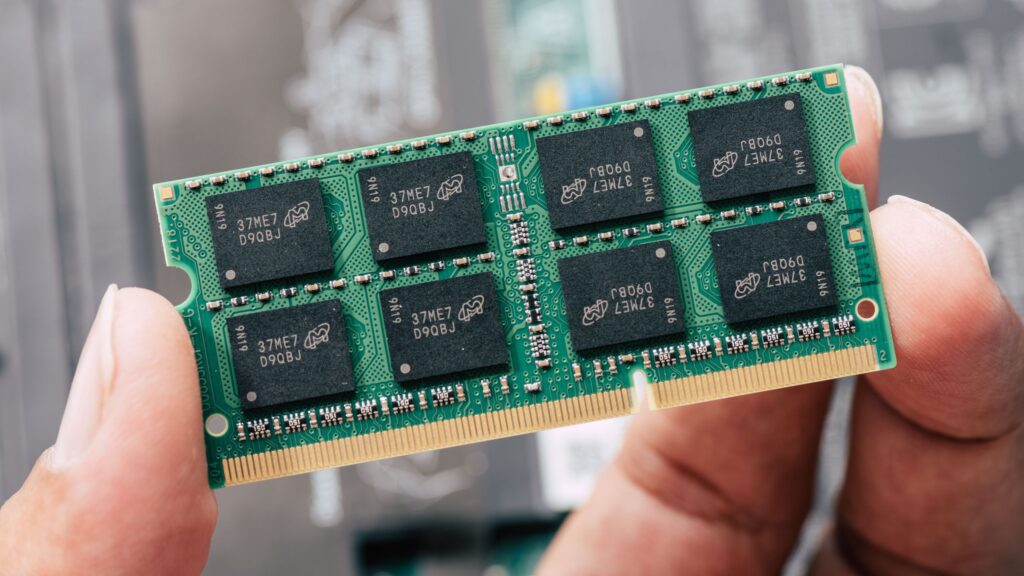
- A memory expert has predicted big RAM price hikes this year
- They say we could see hikes of 40% to 50% in Q3, and further 30% to 40% rises in Q4
- They predict that 2027 is also going to be painful, with a 40% to 45% increase year-on-year
There’s more fuel to the fire for the theory that the RAM crisis is going to get worse, and a lot worse going by this latest forecast — though I’d take it with some seasoning.
Wccftech spotted that Jukan on X highlighted a report from Jefferies, an investment banking firm that has been talking to an analyst in the world of memory who made these bleak predictions.
They include the expectation that memory pricing will increase in a big way as 2026 rolls onwards — we’re talking a 40% to 50% hike in Q3 (compared to this quarter) and a further 30% to 40% rise in the last quarter of 2026.
Latest Videos From
Price hikes are “likely” to continue through 2027, the expert believes, with potentially a 40% to 45% increase year-on-year, which would leave RAM prices at a staggering level come the close of next year.
Only then will we get an easing of pricing in 2028, with memory prices potentially falling by up to 20% due to a combination of slowing demand and more production capacity coming online (with investment in the latter that’s underway now finally coming to fruition).
You may like
Elsewhere on X, P Equity Research shares more of the Jefferies report, which underlines how cloud giants are apparently locking down 50% of total memory production (potentially rising to 70%), signing long-term contracts requiring massive (40%) prepayments. Due to this, consumer electronics makers are facing “severe pressure” and even leaner memory supply going into next year.
Analysis: running the doom gauntlet

(Image credit: Ollyy / Shutterstock)
This is the most doom-laden RAM industry prediction I’ve seen in some time, and there have been a few of those recently. In the order of 40% and then 30% price increases (at minimum) over the next two quarters would be a shocker — bordering on unthinkable.
{ window.reliablePageLoad.then(() => { var componentContainer = document.querySelector(“#slice-container-newsletterForm-articleInbodyContent-NLAfieDrXCGJSQEEbPY5JX”); if (componentContainer) { var data = {“layout”:”inbodyContent”,”header”:”Get daily insight, inspiration and deals in your inbox”,”tagline”:”Sign up for breaking news, reviews, opinion, top tech deals, and more.”,”formFooterText”:”By submitting your information you agree to the Terms & Conditions and Privacy Policy and are aged 16 or over.”,”usDisclaimerFooterText”:”By signing up, you agree to our Terms of services and acknowledge that you have read our Privacy Notice. You also agree to receive marketing emails from us that may include promotions from our trusted partners and sponsors, which you can unsubscribe from at any time.”,”successMessage”:{“body”:”Thank you for signing up. You will receive a confirmation email shortly.”},”failureMessage”:”There was a problem. Please refresh the page and try again.”,”method”:”POST”,”inputs”:[{“type”:”hidden”,”name”:”NAME”},{“type”:”email”,”name”:”MAIL”,”placeholder”:”Your Email Address”,”required”:true},{“type”:”hidden”,”name”:”NEWSLETTER_CODE”,”value”:”XTR-D”},{“type”:”hidden”,”name”:”LANG”,”value”:”EN”},{“type”:”hidden”,”name”:”SOURCE”,”value”:”60″},{“type”:”hidden”,”name”:”COUNTRY”},{“type”:”checkbox”,”name”:”CONTACT_OTHER_BRANDS”,”label”:{“text”:”Contact me with news and offers from other Future brands”}},{“type”:”checkbox”,”name”:”CONTACT_PARTNERS”,”label”:{“text”:”Receive email from us on behalf of our trusted partners or sponsors”}},{“type”:”submit”,”value”:”Sign me up”,”required”:true}],”endpoint”:”https://www.techradar.com/.newsletter-subscribe/v2/submission/submit”,”analytics”:[{“analyticsType”:”widgetViewed”}],”ariaLabels”:{}}; var triggerHydrate = function() { window.sliceComponents.newsletterForm.hydrate(data, componentContainer); } if (window.lazyObserveElement) { window.lazyObserveElement(componentContainer, triggerHydrate); } else { triggerHydrate(); } } }).catch(err => console.error(‘%c FTE ‘,’background: #9306F9; color: #ffffff’,’Hydration Script has failed for newsletterForm-articleInbodyContent-NLAfieDrXCGJSQEEbPY5JX Slice’, err)); }).catch(err => console.error(‘%c FTE ‘,’background: #9306F9; color: #ffffff’,’Externals script failed to load’, err)); ]]>
Sign up for breaking news, reviews, opinion, top tech deals, and more.
Other forecasts are calling price rises, too, but not to this extent. As Wccftech points out, another investment research firm, Aletheia Capital, predicts rises of 30% and perhaps up to 15% in Q3 and Q4 respectively, and Jukan on X points to a current consensus of 20% then 30% hikes respectively.
Granted, that doesn’t look good either, but the view of the expert that Jefferies spoke to feels rather alarmist in comparison. I’ve said it before, and I’ll say it again: in the consumer world, there’s only so much price hiking that people will stand for before they just close their wallets and buying activity starts drying up to a large extent (save for absolutely essential purchases). How much higher can RAM prices go, frankly, before we see those kinds of hardened consumer attitudes coming into play? Not a lot higher, I’d argue.
Although granted, it seems like the talk of price hikes easing off sooner rather than later is now being completely drowned out by the RAM pessimists. The expert who spoke to Jefferies also observes that Chinese memory chip makers won’t come to the rescue to help correct RAM supply outside of Asia in the foreseeable future (meaning this year or next) either, a view we’ve heard echoed elsewhere, and one that (sadly) makes sense.
What to read next
Meanwhile, following fallbacks to DDR3 memory in the past, we’re also seeing that even ancient DDR2 RAM is having a resurgence in popularity in some scenarios, with prices for that memory shooting up as a result according to TrendForce.
As The Verge reports, Valve also just underlined how hard it is to buy RAM at anything approaching a reasonable price – with no room for negotiation whatsoever with memory suppliers, which impacted the cost of the Steam Machine (as predicted).
So yes, everything seems to be backing up the recent cloud of gloom cast on the PC industry by Nvidia‘s CEO, Jensen Huang, who observed that the RAM crisis will be around for “quite a few years“, hinting that it’s a demon we’ll have to live with for the rest of the decade, pretty much.
Yet I still think this latest report goes a step too far with the doom mongering, and that consumers will simply vote not to open their wallets at all (in the main) at some point in the not-so-far-off future. It is, however, clear enough that more misery is coming in some form as 2026 rolls on, so we’ll have to batten down the hatches for now and see how bad the storm gets.
Meantime, if you are in the market for certain components — certainly a new laptop or MacBook — I’d suggest you make a move before too long, as I discussed at length last weekend.

Follow TechRadar on Google News andadd us as a preferred source to get our expert news, reviews, and opinion in your feeds.

The best laptops for all budgets
Our top picks, based on real-world testing and comparisons
Source